
Genome Dock
Genomedock — What It Is
Our bodies are built from a biological “blueprint” known as our genes.By analyzing this genetic blueprint, we can better understand our individual predisposition to certain diseases, how our bodies may respond to medications, and characteristics related to metabolism, immunity, and overall health.Genomedock performs a comprehensive whole-genome analysis, examining your DNA in its entirety to support more precise health management and preventive care.
What Genomedock Helps You Understand
- Disease Risk PredictionCoverage of more than 48 major conditions, including lifestyle-related diseases and cancers.
- Medication Response InsightAssessment of genetic tendencies related to drug metabolism and potential side effects.
- Personalized Lifestyle GuidanceRecommendations for exercise, nutrition, and daily habits aligned with your genetic profile.
- A Lifelong Personal Health ResourceBecause your DNA does not change over time, the results can serve as a long-term foundation for proactive health planning.
How Genomedock Differs from Conventional Gene Panel Tests
Genes contain the instructions for producing the proteins that form our bodies.Human DNA consists of approximately 3 billion base pairs (A, T, C, and G), which encode both:
- Protein-coding regions (transcribed regions)
- Regulatory regions that control when and how genes are expressed
Traditional panel tests examine only a limited set of genes.In contrast, Genomedock analyzes the entire genome (, including both coding and regulatory regions.This comprehensive approach enables the detection of subtle genetic variations and risk factors that may not be captured by panel-based testing—providing a broader and more precise foundation for preventive healthcare.
Whole-Genome Analysis
When people hear terms like “genetic testing” or “whole-genome analysis,” they often think of tests used to detect cancer or congenital disorders.While whole-genome analysis can provide information relevant to those areas, that is not its primary purpose in our clinical setting.
At The cell clinic, whole-genome analysis is positioned as a form of advanced health screening—a more precise extension of a standard medical checkup.This approach aligns with Japan’s national healthcare initiative, “Health Care 2035,” which emphasizes a shift toward preventive medicine.
Three Levels of Preventive Medicine
- 1 Primary Prevention:Preventing disease before it occurs.
- 2 Secondary Prevention:Early detection and early intervention.
- 3 Tertiary Prevention:Supporting recovery and preventing functional decline after illness.
The Genomedock program focuses on Primary and Secondary prevention.It helps identify:
- Your genetic predisposition to various conditions, and
- Medications that may be less effective or more likely to cause side effects based on your genetic profile.
This is why we refer to our service as:Genomedock (Whole-Genome Analysis for Healthcare).
Whole-genome analysis provides a large amount of actionable information.If needed, your results may be shared with medical specialists—such as oncologists—for individualized consultation.
However, at The cell clinic, our primary emphasis is on:
- Prevention of lifestyle-related diseases
- Ongoing health management
- Coordinated referrals to appropriate specialists when necessary
This ensures that the insights gained through Genomedock can be meaningfully applied to long-term, personalized health planning.
Whole-Genome Analysis
— What It Reveals
Our bodies are made of proteins, which are formed from chains of amino acids.The order of these amino acids is determined by genes, which are encoded in DNA.Human DNA consists of approximately 3 billion base pairs, written using four chemical bases: A (adenine), T (thymine), C (cytosine), and G (guanine).A whole-genome analysis examines this entire sequence to understand individual genetic characteristics.
In the past, sequencing the full genome could take more than ten years.However, with the advent of next-generation sequencing, comprehensive genome analysis can now be completed within approximately one day.Today, it is widely used in clinical settings to clarify disease mechanisms and support informed medical care.
What Whole-Genome Analysis Examines
Genes contain both:
- Protein-coding regions(transcribed regions)
- Regulatory regions that control how genes are expressed
Genomedock analyzes both areas across approximately 25,000 genes and surrounding regulatory sequences.
In contrast, conventional gene panel tests examine only limited, predefined genes (often focused on specific cancers or single disorders).Whole-genome analysis provides a broader, more comprehensive understanding, identifying risk factors that may not be captured through panel-based testing.
By understanding your complete genomic profile, you can gain a clearer sense of your body’s natural tendencies and how best to support long-term health.
Benefits of Whole
-Genome Analysis
The primary benefit of Genomedock is the ability to understand your individual health tendencies and to use this insight to create a personalized approach to preventive care.
For example:If the analysis suggests a higher predisposition to gastric cancer, you may choose to undergo earlier or more frequent screenings, allowing you to act proactively rather than reactively.
Differences in genetic sequences between individuals—known as genetic variation—contribute to each person’s unique traits and disease susceptibility.Genomedock uses Genome-Wide Association Studies (GWAS) to estimate the likelihood of developing certain conditions based on these variations.
Many conditions, including hypertension, diabetes, and cancers, arise from a combination of multiple genetic factors and lifestyle influences.Understanding your genetic background can help guide practical decisions in daily life, from nutrition and exercise to long-term medical checkup planning.
What Genomedock May Provide Insight Into
- Estimated predisposition to various conditions(based on GWAS-based risk modeling)
- Potential sensitivities to medications or likelihood of side effects
These insights can help you and your healthcare providers make more informed, personalized choicesto support long-term health.
Conditions Assessed (Examples)
Cancer (11 types)
Lung (adenocarcinoma / squamous), Gastric, Colorectal, Pancreatic, Liver, Esophageal, Prostate, Bladder, B-cell non-Hodgkin lymphoma, etc.
Digestive & Hepatic (7 types)
Chronic hepatitis B/C, Ulcerative colitis, Crohn’s disease, Primary biliary cholangitis, etc.
Cardiovascular & Respiratory (5 types)
Coronary artery disease, Hypertension, Asthma, Moyamoya disease, Idiopathic pulmonary fibrosis.
Metabolic, Endocrine & Renal (7 types)
Type 2 diabetes, Hyperuricemia, Dyslipidemia, IgA nephropathy, Graves’ disease, Sjögren’s syndrome, etc.
Ophthalmologic & Neurologic (7 types)
Glaucoma (open-angle / angle-closure / normal-tension), Age-related macular degeneration, Vitiligo, High myopia, etc.
Autoimmune, Bone & Joint (5 types)
Rheumatoid arthritis, Systemic lupus erythematosus (SLE), Behçet disease, Ankylosing spondylitis, Osteoporosis.
Other Conditions (6 types)
Atopic dermatitis, Cerebral aneurysm, Keloid formation tendency, Hansen’s disease, ALS, Kawasaki disease.
Note:These conditions represent examples of potential risk assessments and do not indicate diagnosis:.Risk levels are statistical estimations and may vary based on lifestyle and environmental factors.
A Single Test with Lifelong Value
Your genetic information does not change over time.This means that the insights gained from Genomedock can serve as a long-term guide for your personal health decisions.
How This Information Can Support You
- Understand your inherent health tendenciesand take preventive measures.
- Support family health awareness,as genetic traits can be shared.
- Benefit from ongoing medical research, as genomic insights continue to evolve.
- Receive coordinated follow-up supportin collaboration with medical specialists.
At The cell clinic, whole-genome analysis is performed by extracting and analyzing your complete DNA sequence, evaluating genetic variations and individual traits using advanced analytical software.We collaborate with leading hospitals and research institutions in Japan to ensure accuracy and reliability in our analysis.
In addition, for individuals identified with elevated risk levels, we provide specialist referrals and ongoing follow-up care, supporting informed and proactive health management.
Sequencing Platform
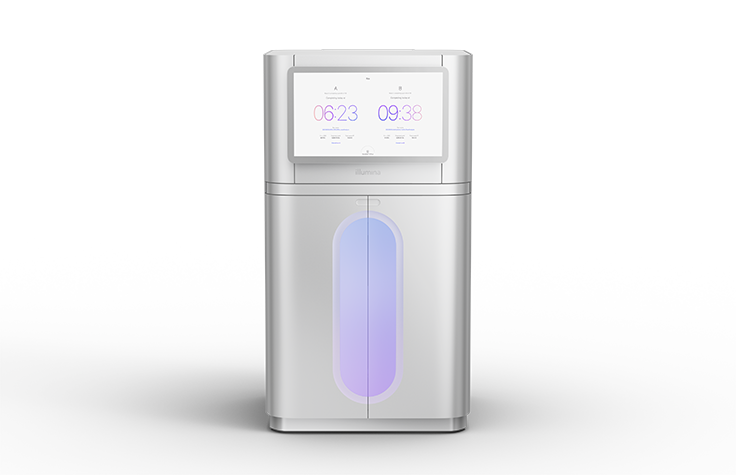
We utilize NovaSeq X Plus (Illumina), a high-throughput sequencing system also used in advanced medical and research institutions.
Frequently Asked Questions
FAQ
Q. Is this a diagnostic test?
A. No. The purpose is preventive healthcare and risk evaluation, not diagnosis.
If symptoms or high-risk findings are identified, we may recommend consultation with a specialist.
Q. How accurate is it?
A. Results are based on statistical associations (GWAS) and updated scientific databases.
We work with analysis partners that specialize in Japanese genomic data for improved relevance.
Q. How are results delivered?
A. A structured PDF report is provided, organized into Disease Risk / Exercise / Nutrition views.
An online consultation is included to explain the results.
Q. Is my data secure?
A. Data is strictly managed and not used for any purpose outside of the analysis.
Details are outlined in our Privacy Policy.
Sample Report (PDF)
Sample PDF
This is a healthcare-oriented report organized into three views:
Disease Risk, Exercise, and Nutrition.
Please note that this report is not a diagnostic certificate.
Process & Pricing
1.Reservation & Pre-Consultation
2.Consent and Payment (credit cards accepted)
3.Blood Collection (approx. 10–15 minutes)
4.Genome Sequencing & Analysis (approx. 4 weeks)
5.Genome Sequencing & Analysis (approx. 30 minutes)
6.Ongoing support or specialist referral if appropriate
Genomedock (Whole-Genome Analysis) ¥660,000 (tax included)
Includes sequencing, analysis report, and explanation session.This service is provided as self-pay medical care (not covered by insurance).
Important Note
This program is intended for preventive healthcare and informational purposes only.
It does not diagnose or determine treatment for any medical condition.
Risk levels may vary depending on lifestyle and environmental factors.
